


The Science of Learning in the Age of AI · Part 3 of 4
The Myth of Multitasking
Why focus is becoming the ultimate competitive advantage.
You open your laptop to write one email. Twenty minutes later you are three tabs deep in a completely different problem, the email still unsent, and you cannot quite reconstruct how you got there. Nothing dramatic happened. No single moment pulled you away. It was a notification, then a “quick” search that spawned three more questions, then a Slack message that felt urgent enough to answer immediately, then the vague sense that you should check the news. Each step felt small and reasonable. The sum of them was an entire morning spent in motion without arriving anywhere. This is not a discipline problem, and it is not unique to you. It is what happens when a brain built to focus on one thing at a time is handed a world, and now a set of AI tools, engineered to offer it something new every few seconds.
The first two parts of this series looked inward — at the size of your mental workbench and at what still belongs in your own memory versus an AI’s. This part looks at something that determines whether any of that capacity ever gets used well in the first place: where your attention actually goes, and what it costs every time it moves.
The neuroscience of attention
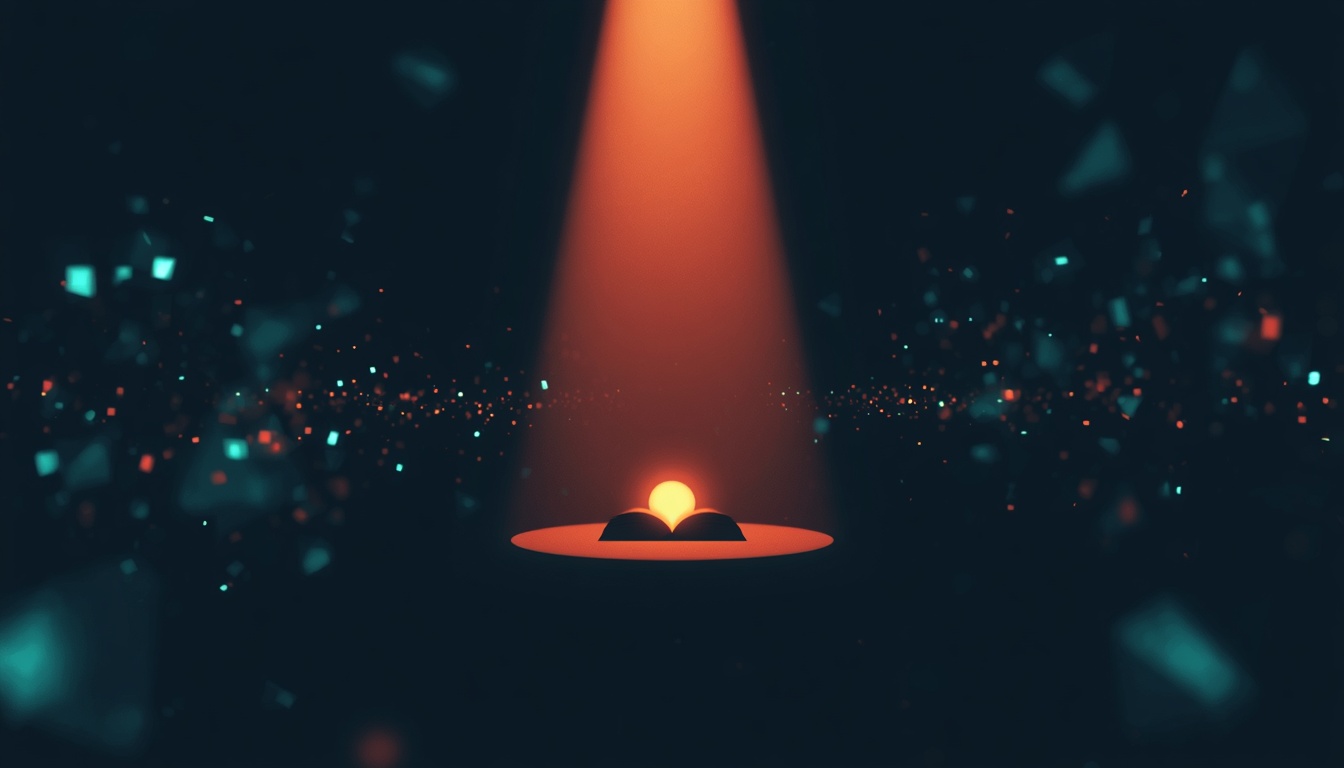
Attention is often described as if it were a spotlight — you point it somewhere and that thing becomes clear while everything else dims. The metaphor is useful because it captures a real constraint: the spotlight can only illuminate one place at a time. Your brain does not process two demanding streams of information simultaneously so much as it rapidly alternates between them, and each alternation has a cost. What feels like “doing two things at once” is almost always the brain doing one thing, then quickly the other, then back again — juggling, not lifting two things together.
That switching has gotten faster and more frequent than it used to be, and researchers have been able to measure the shift directly. Psychologist Gloria Mark and her colleagues at UC Irvine have tracked how long people stay on a single screen before moving to something else, using the same logging methods across two decades. In 2004, the average was about two and a half minutes. By 2012, it had fallen to 75 seconds. In the years since, it has settled at around 47 seconds — with half of all observed stretches of attention lasting 40 seconds or less.

This is not evidence that human brains have changed. It is evidence that the environment asking for our attention has changed, and the brain is responding exactly as you would expect a limited resource to respond when it is interrupted more often. Every screen, tab, and app is competing for the same spotlight, and most of them are explicitly designed to win that competition.
Task switching and cognitive costs
What actually happens in the brain when you switch tasks? Cognitive psychologists describe it as a two-stage process: first a “goal shift” — deciding to stop doing one thing and start another — and then “rule activation,” where the mental settings appropriate to the new task get loaded in and the old ones get suppressed. Both stages take real time, even when the switch feels instantaneous.
In a set of controlled experiments, Rubinstein, Meyer, and Evans had participants alternate between different types of tasks and measured how much time and accuracy was lost with each switch. Switching produced measurable time costs and more errors in every condition, and the cost grew larger as the tasks became more complex or unfamiliar — meaning the more demanding the work, the more expensive it is to interrupt.
Source: Rubinstein, Meyer & Evans (2001), Journal of Experimental Psychology: Human Perception and Performance
There is a second, subtler cost that does not show up the moment you switch — it shows up afterward. Organizational psychologist Sophie Leroy calls it attention residue: part of your mind stays occupied with the task you just left, especially if it was unfinished or interrupted under time pressure. You have moved on to the new task, but a portion of your working memory is still quietly running the old one in the background, and your performance on whatever comes next suffers for it.
Perhaps the most counterintuitive finding in this area concerns people who multitask constantly. A well-known study by Ophir, Nass, and Wagner compared people who habitually juggle many media streams against those who rarely do, expecting the heavy multitaskers to be better at it — after all, they get more practice. Instead, the heavy multitaskers performed worse across several measures of attention and cognitive control, largely because they were less able to filter out irrelevant information once it was in front of them. Frequent switching did not train their brains to switch well. It trained their brains to notice everything, including the things they were trying to ignore.

This is the number that tends to change how people think about “just checking” something. In field studies tracking real knowledge workers across a normal workday, Mark’s research found that once someone is pulled away from a task, it takes roughly 25 minutes on average to fully return to the same level of depth and focus they had before the interruption — even when the interruption itself lasted only a few seconds. A notification you glance at for two seconds can cost you the better part of an hour of degraded focus, not because the notification was demanding, but because refocusing itself is slow.
Deep work and flow
There is a well-documented state on the opposite end of this spectrum. Psychologist Mihaly Csikszentmihalyi spent decades studying moments when people become so absorbed in a task that self-consciousness and the passage of time seem to fall away — a state he named flow. Flow tends to appear under specific conditions: the task is challenging but achievable, the goal is clear, and feedback on progress is immediate. It is also fragile. Flow takes time to enter and almost no time at all to break.
This is the real tension between switching and depth. A day built around constant task switching is a day that never allows enough uninterrupted time for flow to develop, no matter how many hours are logged. Writer Cal Newport, drawing on this same body of research, has argued that the ability to focus without distraction on cognitively demanding work — what he calls deep work — is becoming rarer precisely because it is so easy to avoid, and rarer things become more valuable. If everyone around you is available, reachable, and switching every 47 seconds, the person who can hold a single problem in mind for two uninterrupted hours has an advantage that has nothing to do with raw intelligence.
The cost of an interruption was never the interruption itself. It was everything it took to find your way back.
Using AI intentionally, without constant interruption
AI tools sit at an odd intersection of this problem. Used one way, they are one more source of pings, tabs, and quick side-quests — another thing competing for the 47-second window. Used another way, they can actually protect deep focus by absorbing the shallow work that used to force the switches in the first place: drafting a routine reply, formatting a document, looking up a fact that would otherwise have sent you down a research rabbit hole.
The difference is rarely the tool. It is whether you decide in advance what belongs to focused human attention and what can be safely handed off or interleaved. A few practical distinctions:
- Batch the shallow work. Let AI help clear routine tasks — quick drafts, scheduling, formatting, simple lookups — in one dedicated block, rather than letting each one interrupt something deeper.
- Protect your deepest hours from notifications, including AI ones. A chat window open in the background is still a 47-second temptation. Close it during the work that needs real depth.
- Use AI to resume, not just to start. A short note to yourself — or a well-prompted AI summary of where you left off — can shrink some of that 25-minute refocusing cost after a necessary interruption.
- Ask whether a task needs your judgment or just your presence. If it’s the latter, it may not need to happen on your primary attention at all.

Building sustainable learning habits
For educators and lifelong learners specifically, this has a direct practical implication: the way a learning session is structured matters as much as how long it lasts. A 90-minute study block broken into constant app-switching produces far less retained learning than the same 90 minutes spent in two or three protected, single-task stretches — not because the learner is less capable, but because every switch imposes the same goal-shifting and rule-activation costs documented in the task-switching research above, and every interruption leaves attention residue that competes with whatever comes next.
A few habits translate the research directly into practice: closing unrelated tabs and muting notifications before a learning session begins, treating AI tools as something you consult in a defined window rather than a constant open channel, and building in short breaks between distinct tasks rather than trying to hold several loosely related ones open at once. None of this requires more willpower. It requires designing the environment so that fewer switches are asked of the brain in the first place.
What to remember
- Multitasking is mostly an illusion — the brain switches rapidly between tasks rather than running them simultaneously, and each switch has a measurable cost.
- Sustained attention spans have shrunk from roughly two and a half minutes in 2004 to about 47 seconds today, tracking a more interruption-heavy environment.
- A single interruption can cost around 25 minutes of refocusing time, far more than the interruption itself.
- Heavy multitaskers tend to perform worse at filtering distractions, not better — frequent switching doesn’t train focus, it trains distractibility.
- AI can protect deep focus if it absorbs shallow, routine work — or erode it further if it’s just one more constant interruption.
Memory Is Becoming Optional
What happens when AI remembers everything, and what humans should still hold onto.
What Does It Mean to Be Educated in an AI World?
The human skills — judgment, creativity, adaptability — that become more valuable because of AI.
- Mark, G. (research summarized in Attention Span: A Groundbreaking Way to Restore Balance, Happiness and Productivity, 2023, and in ongoing UC Irvine research tracking screen-attention duration since 2004).
- Rubinstein, J. S., Meyer, D. E., & Evans, J. E. (2001). Executive control of cognitive processes in task switching. Journal of Experimental Psychology: Human Perception and Performance, 27(4), 763–797.
- Leroy, S. (2009). Why is it so hard to do my work? The challenge of attention residue when switching between work tasks. Organizational Behavior and Human Decision Processes, 109(2), 168–181.
- Ophir, E., Nass, C., & Wagner, A. D. (2009). Cognitive control in media multitaskers. Proceedings of the National Academy of Sciences, 106(37), 15583–15587.
- Csikszentmihalyi, M. (1990). Flow: The Psychology of Optimal Experience. Harper & Row.
Leave a Reply