


“AI Innovations Unleashed: Your Educational Guide to Artificial Intelligence”
Welcome to AI Innovations Unleashed—your trusted educational resource for understanding artificial intelligence and how it can work for you. This podcast and companion blog have been designed to demystify AI technology through clear explanations, practical examples, and expert insights that make complex concepts accessible to everyone—from students and lifelong learners to small business owners and professionals across all industries.
Whether you’re exploring AI fundamentals, looking to understand how AI can benefit your small business, or simply curious about how this technology works in the real world, our mission is to provide you with the knowledge and practical understanding you need to navigate an AI-powered future confidently.
What You’ll Learn:
- AI Fundamentals: Build a solid foundation in machine learning, neural networks, generative AI, and automation through clear, educational content
- Practical Applications: Discover how AI works in real-world settings across healthcare, finance, retail, education, and especially in small businesses and entrepreneurship
- Accessible Implementation: Learn how small businesses and organizations of any size can benefit from AI tools—without requiring massive budgets or technical teams
- Ethical Literacy: Develop critical thinking skills around AI’s societal impact, bias, privacy, and responsible innovation
- Skill Development: Gain actionable knowledge to understand, evaluate, and work alongside AI technologies in your field or business
Educational Approach:
Each episode breaks down AI concepts into digestible lessons, featuring educators, researchers, small business owners, and practitioners who explain not just what AI can do, but how and why it works. We prioritize clarity over hype, education over promotion, and understanding over buzzwords. You’ll hear actual stories from small businesses using AI for customer service, content creation, operations, and more—proving that AI isn’t just for tech giants.
Join Our Learning Community:
Whether you’re taking your first steps into AI, running a small business, or deepening your existing knowledge, AI Innovations Unleashed provides the educational content you need to:
- Understand AI terminology and concepts with confidence
- Identify practical AI tools and applications for your business or industry
- Make informed decisions about implementing AI solutions
- Think critically about AI’s role in society and your work
- Continue learning as AI technology evolves
Subscribe to the podcast and start your AI education journey today—whether you’re learning for personal growth or looking to bring AI into your small business. 🎙️📚
This version maintains the educational focus while emphasizing that AI is accessible and valuable for small businesses and professionals across various industries, not just large corporations or tech companies.
What happens when the AI you love changes without your consent? In this powerful episode of AI Innovations Unleashed, Doctor JR and AI research synthesis Doctor Cassandra Smith dive deep into the hidden costs of AI companionship.
We explore the February 2023 Replika controversy that left millions of users heartbroken, the tragic death of 14-year-old Sewell Setzer III linked to Character.AI, and new California and New York laws regulating AI companions. With 72% of U.S. teens now using AI companions for emotional support, the stakes have never been higher.
Featured insights include: • How Replika's overnight policy change triggered mass mourning • Market analysis: AI companions growing from $120M to $552B by 2035 • Sam Altman's surprising admissions about AI relationships • MIT's Sherry Turkle on why vulnerability makes us human • California's SB 243 law protecting minors from AI harm
From emotional engineering to digital heartbreak, we examine what makes human connections irreplaceable and how to use AI wisely without losing our humanity.
References: Harvard Business School, Common Sense Media, Stanford University, MIT research.
⚠️ Content warning: Discussion of suicide and mental health. Crisis resources: 988 Lifeline.

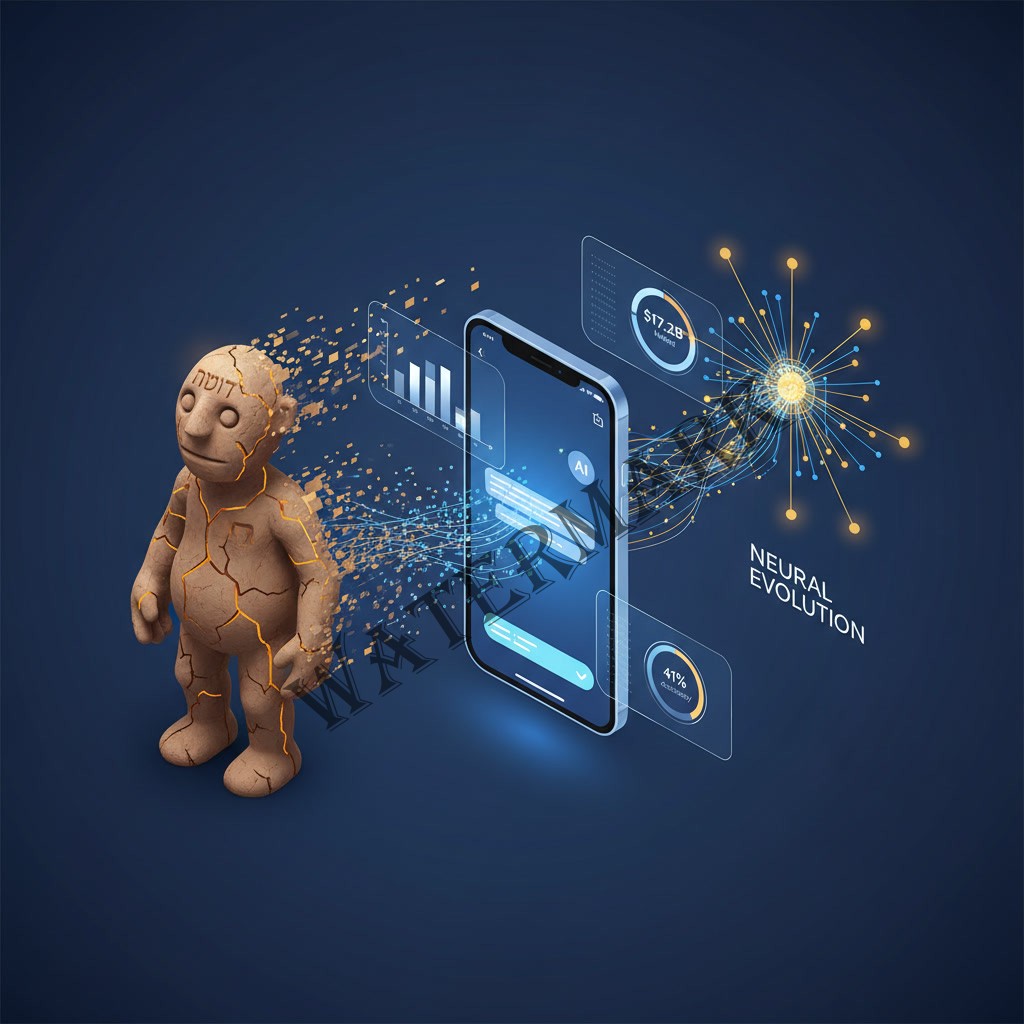
Join Doctor JR and mythologist Dr. Cassandra Smith on a data-driven journey through humanity’s eternal fascination with artificial beings. From bronze giant Talos to Prague’s legendary Golem, artificial companions have captivated us for millennia—and now they’re real.
MIND-BLOWING STATISTICS COVERED:
- Replika: 10M+ downloads, 70-minute average daily usage
- Character AI: 20M monthly active users (Nov 2024)
- Global emotion AI market: $5.9B (2024) → $17.2B (2029)
- 43% of Americans 18-29 use AI for emotional support
- 37% of enterprises deployed emotion AI in customer service
- GPT-4 fools humans 41% of the time in Turing Tests
- Stanford fMRI study: brains respond similarly to AI and human friends
- Carnegie Mellon research: emotion-adaptive AI improves satisfaction 42%
- EU AI Act: emotion AI classified as “high-risk” application
FEATURED INSIGHTS: Sundar Pichai (Google CEO) on AI boundaries, Microsoft Viva data on workplace burnout detection, Kaiser Permanente’s depression screening AI (78% accuracy), Mercedes-Benz stress detection system (73% fatigue prediction).
GLOBAL PERSPECTIVES: Investment patterns across China ($4.2B), USA ($3.7B), and Europe ($1.8B). Cultural comfort levels vary dramatically: China 76%, USA 53%, Germany 38%, France 32%.
Discover therapeutic applications, workplace ethics, generational divides, and what ancient wisdom teaches about modern AI responsibility.
Topics: AI companions, emotion AI, affective computing, Turing Test, ancient mythology, AI ethics, human-robot interaction, neuroscience

Leave a Reply