



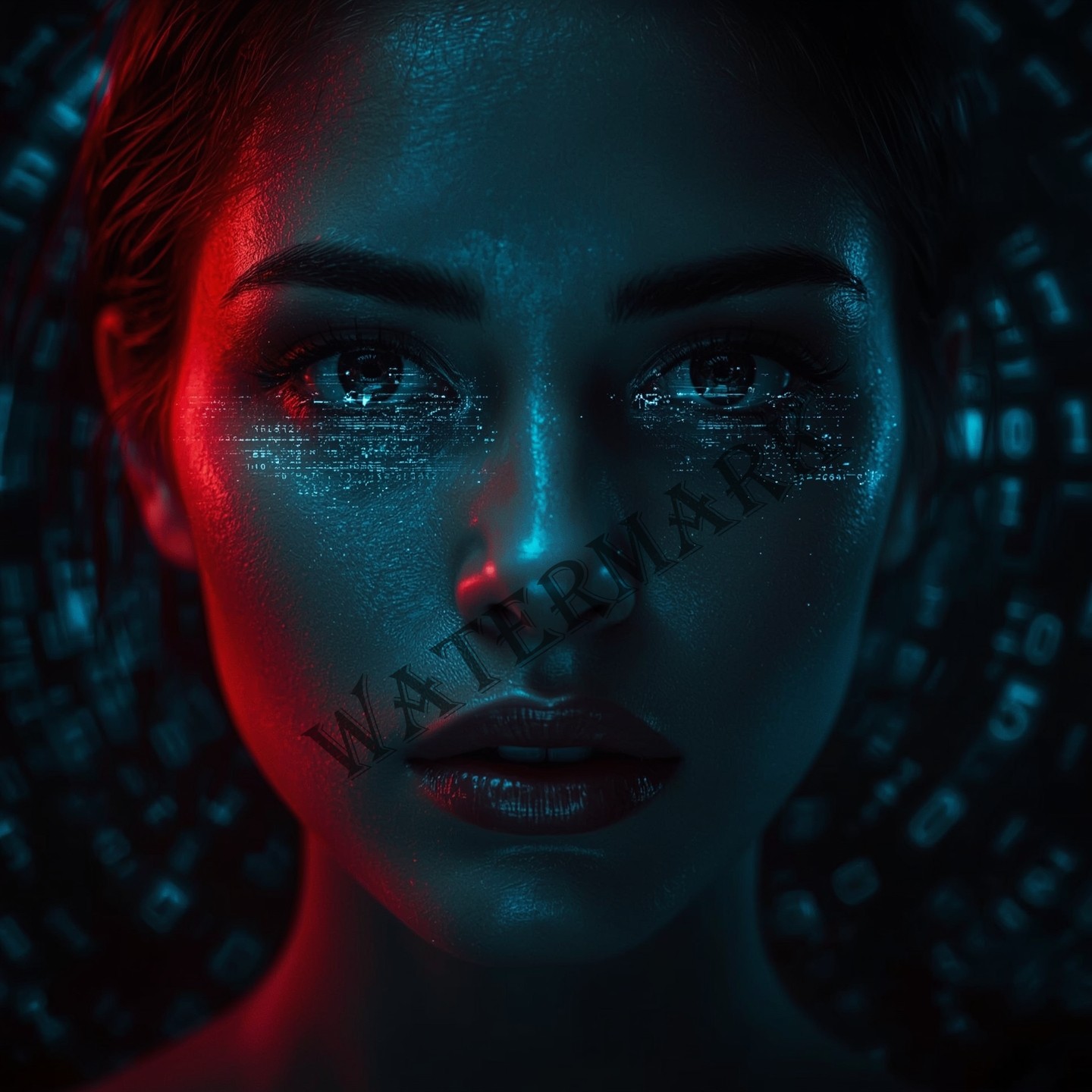
Deepfakes, “Photoshop on steroids” for video/audio, challenge trust by making fake content incredibly convincing. From scamming individuals to influencing elections, their impact is vast. While risks are real, deepfakes also offer positive potential in entertainment, education, and accessibility. Navigating this means individual vigilance, tech solutions, and global policies.

“AI Innovations Unleashed: Your Educational Guide to Artificial Intelligence”
Welcome to AI Innovations Unleashed—your trusted educational resource for understanding artificial intelligence and how it can work for you. This podcast and companion blog have been designed to demystify AI technology through clear explanations, practical examples, and expert insights that make complex concepts accessible to everyone—from students and lifelong learners to small business owners and professionals across all industries.
Whether you’re exploring AI fundamentals, looking to understand how AI can benefit your small business, or simply curious about how this technology works in the real world, our mission is to provide you with the knowledge and practical understanding you need to navigate an AI-powered future confidently.
What You’ll Learn:
- AI Fundamentals: Build a solid foundation in machine learning, neural networks, generative AI, and automation through clear, educational content
- Practical Applications: Discover how AI works in real-world settings across healthcare, finance, retail, education, and especially in small businesses and entrepreneurship
- Accessible Implementation: Learn how small businesses and organizations of any size can benefit from AI tools—without requiring massive budgets or technical teams
- Ethical Literacy: Develop critical thinking skills around AI’s societal impact, bias, privacy, and responsible innovation
- Skill Development: Gain actionable knowledge to understand, evaluate, and work alongside AI technologies in your field or business
Educational Approach:
Each episode breaks down AI concepts into digestible lessons, featuring educators, researchers, small business owners, and practitioners who explain not just what AI can do, but how and why it works. We prioritize clarity over hype, education over promotion, and understanding over buzzwords. You’ll hear actual stories from small businesses using AI for customer service, content creation, operations, and more—proving that AI isn’t just for tech giants.
Join Our Learning Community:
Whether you’re taking your first steps into AI, running a small business, or deepening your existing knowledge, AI Innovations Unleashed provides the educational content you need to:
- Understand AI terminology and concepts with confidence
- Identify practical AI tools and applications for your business or industry
- Make informed decisions about implementing AI solutions
- Think critically about AI’s role in society and your work
- Continue learning as AI technology evolves
Subscribe to the podcast and start your AI education journey today—whether you’re learning for personal growth or looking to bring AI into your small business. 🎙️📚
This version maintains the educational focus while emphasizing that AI is accessible and valuable for small businesses and professionals across various industries, not just large corporations or tech companies.
Ninety-eight percent of employers now use skills-based hiring for entry-level roles — and the credential doing the heavy lifting isn't a four-year degree. It's the micro-credential: a short, verifiable, skill-specific certification that's quickly becoming a ”skills passport” candidates carry from job to job.
In this episode of AI in 5, The AI Learning Guide JR breaks down what a micro-credential actually is versus a traditional degree or PDF certificate, why standards like Open Badges 3.0 are making these credentials tamper-proof and portable, and why employers are willing to pay up to 15% more in starting salary — and move candidates 73% faster through hiring — when a verified badge is on the table.
You'll hear from Geoff Hirsch, a Microsoft training leader, and Francesca Lockhart, a University of Texas at Austin professor, on where classrooms and hiring managers are heading next — and where the hype still outpaces the evidence. Whether you're a teacher redesigning an assessment, a parent guiding a teen's course choices, or a career-changer building a new resume, this episode gives you a five-minute action plan for building a skills passport that actually gets noticed.
Sources
- Coursera. (2025, August 8). Micro-credentials and the future of talent: 5 key trends employers should know.https://www.coursera.org/enterprise/articles/micro-credentials-and-the-future-of-talent-cm
- Coursera. (2026, June 4). Introducing Coursera's Micro-Credentials Report 2026: 94% of employers willing to offer higher starting salaries to graduates with micro-credentials. Coursera Blog. https://blog.coursera.org/coursera-micro-credentials-impact-report-2026/
- Sertifier. (2026, May 25). Skill-based hiring in 2026: The 85% vs 0.14% paradox.https://sertifier.com/blog/skill-based-hiring-2026/
Want to go deeper than the podcast?
Join The Unleashed — the growing AI Innovations Unleashed community for educators, parents, students, leaders, and curious minds navigating the future of AI together. Members get deeper discussions, exclusive insights, behind-the-scenes content, early updates, and a place to explore how artificial intelligence is reshaping education and society in real time.
AI is moving fast. You don’t have to figure it out alone.
Join The Unleashed:
https://www.aiinnovationsunleashed.com/become-a-supporter-join-the-unleashed/
AI Innovations Unleashed: The Deepfake Apocalypse That Wasn’t (Yet) – Show Notes
Episode Title: The Deepfake Apocalypse That Wasn’t (Yet) Hosts: Dr. JR & Dr. Evelyn Reed Topic: Deepfakes: Digital reality manipulation, its impact, and solutions.
I. Understanding Deepfakes: The Basics
- What is a Deepfake? “Photoshop on steroids” for video/audio. It makes people say or do things they didn’t.
- “Deep” Learning: A computer “student” learns from tons of examples (pictures, videos) of a person’s voice/looks, then creates new, realistic content.
- GANs (Generative Adversarial Networks): Like an “art competition” between two AIs. A “Generator” creates fakes, and a “Discriminator” tries to spot them. This constant battle makes fakes incredibly convincing.
II. The Everyday Impact: When Trust Gets Tricked
- Erosion of Trust: Deepfakes make it hard to trust what you see/hear online, fracturing shared understanding.
- Personal Example: Stacey Svegliato from Houston was scammed after a deepfake video call mimicking a friend. Her own deepfake videos then tried to sell things, causing family/friends to lose money.
- Paradox of Skepticism: Constant questioning of online content can lead to exhaustion and apathy, hindering engagement with real information.
III. Deepfakes as Weapons: Geopolitical and Democratic Threats
- Information Warfare: Deepfakes are strategic tools to manipulate public opinion and destabilize nations.
- Key Incidents:
- Zelenskyy Deepfake (Ukraine, 2022): A fake video of President Zelenskyy ordering surrender was quickly debunked due to “pre-bunking” warnings.
- New Hampshire Robocalls (U.S., 2024): AI-generated calls mimicking President Biden falsely told voters not to vote, highlighting how cheap and easy election interference can be.
IV. The Cost of Deception: Financial Fraud and Identity Theft
- Corporate Losses: Deepfakes pose a huge threat to finance.
- Arup Incident (2024): An employee was tricked into transferring $25-39 million after deepfake video calls mimicked the company’s CFO and other executives.
- Surging Fraud: AI-enabled fraud reached $12.3 billion in 2023, projected to hit $40 billion by 2027. Deepfake fraud attempts surged 2137% in three years.
- Identity Theft: Deepfakes are used for blackmail (“fake news” videos) and bypassing biometric identity verification.
- Solutions: “Liveness tests” (blinking, smiling) and “behavioral biometrics” help detect fakes during identity checks.
V. Protecting Our Digital Selves: Deepfakes, Celebrities, and Intellectual Property
- “Digital Self” Ownership: AI’s ability to copy voices/faces without permission forces new thinking on identity ownership.
- Entertainment Challenges:
- “Heart on My Sleeve” (2023): An AI song with Drake/The Weeknd-like voices sparked debate on artist rights.
- Scarlett Johansson vs. OpenAI (2023-2024): OpenAI used an AI voice “eerily similar” to Johansson’s, despite her refusal to license her voice.
- Taylor Swift Deepfake (2024): Sexually explicit AI images widely spread, showing the harm of non-consensual content.
- Legal Concepts: “Intellectual Property” (ownership of creations) and “Right of Publicity” (control over commercial use of one’s likeness/voice) are evolving.
- Legislative Efforts: Laws like the “Take It Down Act” (US) target explicit deepfakes, and “ELVIS Act” (Tennessee) protects voice/likeness. But global cooperation is needed as laws are fragmented.
VI. Beyond the Shadows: The Positive Potential of Deepfakes
- Entertainment & Art: De-aging actors (Star Wars), bringing historical figures back, creating hyper-realistic avatars (MetaHuman Creator), and making VFX cheaper.
- Education & Accessibility: Historical figures can “teach” (Salvador Dalí Museum, Agatha Christie course). “Project Revoice” helps preserve voices for people with MND. AI-driven lip-syncing improves language translation in media.
VII. Navigating the Deepfake World: Challenges and Solutions
- Detection Dilemma: Deepfakes constantly improve, making detection a “cat and mouse” game. Current tools are unreliable (55% accuracy “in the wild”).
- Becoming a Digital Detective: Individual vigilance is key. Cultivate skepticism.
- Checklist: Look for unnatural blinking, bad lip-sync, odd skin, or inconsistent lighting (visual). Listen for robotic speech or out-of-sync audio (audio). Question the source and check for corroborating evidence (contextual).
- Technological Countermeasures: Digital watermarking, blockchain for authenticity, and advanced biometrics help verify content.
- Policy & Collaborative Action: Global, harmonized legislation is needed (EU AI Act, China’s regulations, UK Online Safety Act). Platforms must invest in detection and moderation. International cooperation is essential.
VIII. Conclusion: Building a Resilient Digital Future
- Deepfakes are a defining challenge of our digital age, powerful for good, but also for deception.
- The erosion of trust is a persistent issue; purely tech solutions aren’t enough.
- Building Resilience: Requires a multi-pronged effort:
- Individuals: Media literacy, critical thinking.
- Tech Companies: Robust detection, content provenance, clear moderation.
- Governments/Policymakers: Harmonized legislation, global standards for labeling/consent.
- “The Deepfake Apocalypse That Wasn’t (Yet)” is a call to action for continuous adaptation and collaboration to preserve truth in the digital age.