

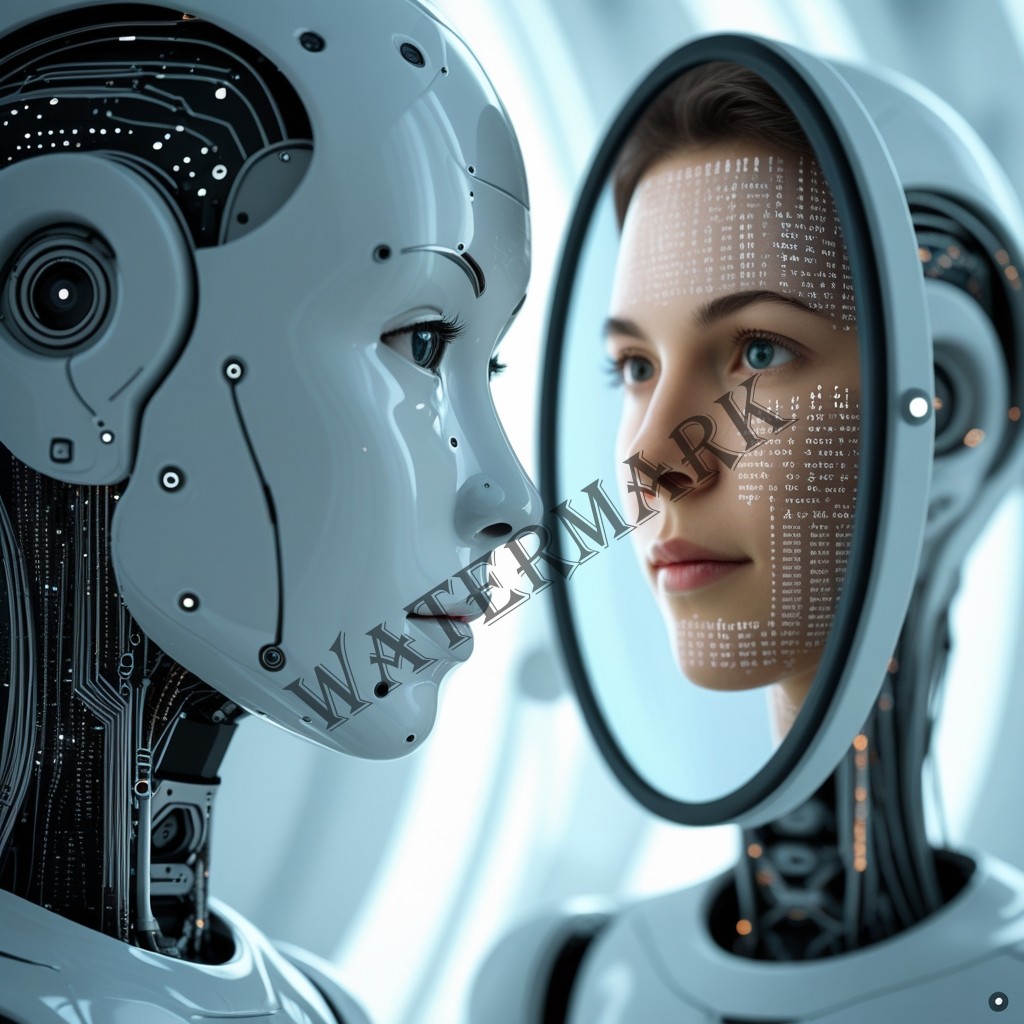
Can AI be biased? In this episode of AI Innovations Unleashed, Dr. JR and Casey Brightman unpack how algorithms inherit human flaws—and what we’re doing to fix them. From hiring tools to healthcare, it’s not just about tech—it’s about justice.

“AI Innovations Unleashed: Your Educational Guide to Artificial Intelligence”
Welcome to AI Innovations Unleashed—your trusted educational resource for understanding artificial intelligence and how it can work for you. This podcast and companion blog have been designed to demystify AI technology through clear explanations, practical examples, and expert insights that make complex concepts accessible to everyone—from students and lifelong learners to small business owners and professionals across all industries.
Whether you’re exploring AI fundamentals, looking to understand how AI can benefit your small business, or simply curious about how this technology works in the real world, our mission is to provide you with the knowledge and practical understanding you need to navigate an AI-powered future confidently.
What You’ll Learn:
- AI Fundamentals: Build a solid foundation in machine learning, neural networks, generative AI, and automation through clear, educational content
- Practical Applications: Discover how AI works in real-world settings across healthcare, finance, retail, education, and especially in small businesses and entrepreneurship
- Accessible Implementation: Learn how small businesses and organizations of any size can benefit from AI tools—without requiring massive budgets or technical teams
- Ethical Literacy: Develop critical thinking skills around AI’s societal impact, bias, privacy, and responsible innovation
- Skill Development: Gain actionable knowledge to understand, evaluate, and work alongside AI technologies in your field or business
Educational Approach:
Each episode breaks down AI concepts into digestible lessons, featuring educators, researchers, small business owners, and practitioners who explain not just what AI can do, but how and why it works. We prioritize clarity over hype, education over promotion, and understanding over buzzwords. You’ll hear actual stories from small businesses using AI for customer service, content creation, operations, and more—proving that AI isn’t just for tech giants.
Join Our Learning Community:
Whether you’re taking your first steps into AI, running a small business, or deepening your existing knowledge, AI Innovations Unleashed provides the educational content you need to:
- Understand AI terminology and concepts with confidence
- Identify practical AI tools and applications for your business or industry
- Make informed decisions about implementing AI solutions
- Think critically about AI’s role in society and your work
- Continue learning as AI technology evolves
Subscribe to the podcast and start your AI education journey today—whether you’re learning for personal growth or looking to bring AI into your small business. 🎙️📚
This version maintains the educational focus while emphasizing that AI is accessible and valuable for small businesses and professionals across various industries, not just large corporations or tech companies.
Interact with us NOW! Send a text and state your mind.
Is AI the great equalizer — or the next thing that widens the gap?
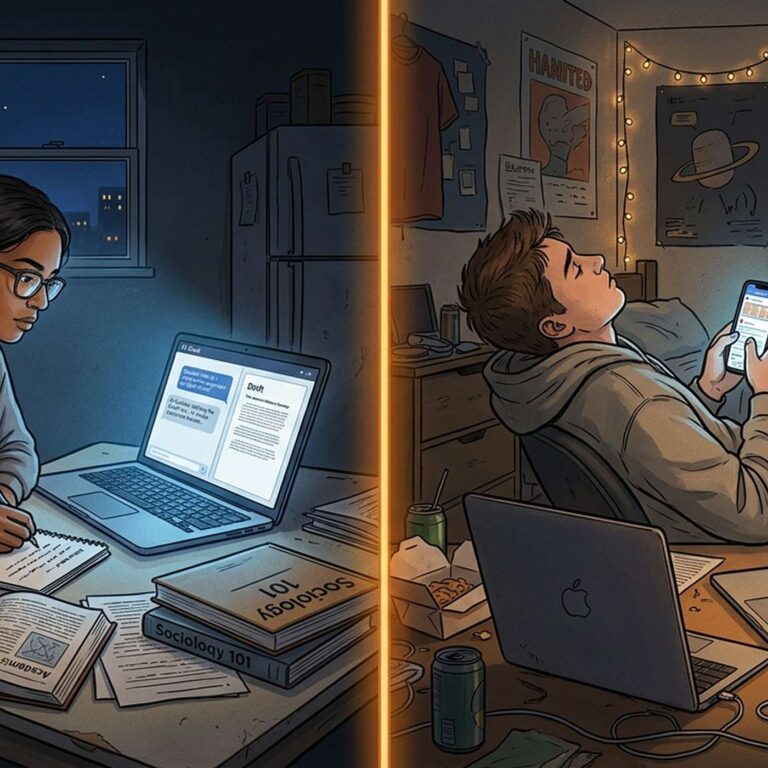
In Episode 2 of The Learning Curve, JR and ARIA go inside the student experience — and what they find is messier, more hopeful, and more urgent than the cheating-panic headlines suggest.
This episode covers: how first-generation students are using AI to access tutoring they could never afford; why Turnitin's false positive rates are harming the very students AI was supposed to help; what cognitive science says about 'desirable difficulties' and when AI use undermines learning; and why AI fluency is already becoming a class marker in the labor market.
ARIA also names what she fundamentally cannot know — including whether a student understood something or just produced something that looks like understanding.
Resources Referenced in This Episode
- Khan Academy Khanmigo — khanmigo.khanacademy.org | Free AI tutoring built for students
- Common Sense Media AI Literacy Curriculum — commonsense.org/education | Free K-12 curriculum
- Day of AI — dayofai.org | Free AI literacy materials from MIT
- All4Ed Student Resources — all4ed.org | Equity-focused education policy and tools
- Turnitin Academic Integrity Resource Center — turnitin.com/educators/academic-integrity
- Student Voice — studentvoice.com | Student-led advocacy and policy engagement
? Episode Summary
Bias in AI isn’t a future problem—it’s happening right now. In this powerful third episode of our “May I Learn About AI?” series, Dr. JR and AI ethics researcher Casey Brightman explore how artificial intelligence can unintentionally (and sometimes dangerously) reflect the biases of its human creators.
We dig into real-world stories, from biased healthcare algorithms and hiring tools to flawed facial recognition and education software. Along the way, we explain how bias creeps into data, how it impacts real people, and what governments, businesses, and researchers are doing to push back.
This Mother’s Day episode reflects on the values of fairness and care—asking if our AI systems can be built to uphold them, and what role we play in shaping a more equitable digital future.
? What You’ll Learn
- What AI bias actually is (hint: it’s not about feelings—it’s about patterns)
- How training data and algorithm design can unintentionally lead to unfair outcomes
- Real-world consequences of AI bias in healthcare, hiring, policing, and education
- How emerging policies like the EU AI Act and NYC Local Law 144 are tackling the issue
- Global efforts in countries like India and Canada to build more inclusive AI
- Bias in generative AI tools like GPT and DALL·E—and how it shapes creativity
- What you can do to advocate for fairness and accountability in AI systems
? Mentioned In This Episode
- Algorithmic Justice League – https://www.ajl.org
- UNESCO Recommendation on AI Ethics – https://unesdoc.unesco.org
- NYC Local Law 144 – https://www.nyc.gov/assets/dca/downloads/pdf/about/LL144.pdf
- EU AI Act – https://digital-strategy.ec.europa.eu/en/policies/european-approach-artificial-intelligence
- Black in AI – https://blackinai.github.io
- Bolukbasi et al. (2016) on word embeddings bias
- Obermeyer et al. (2019) on healthcare algorithms and racial bias
? Call to Action
- Ask questions about how AI is used in your workplace or school.
- Advocate for transparency and fairness in tech tools.
- Support ethical AI organizations pushing for accountability.
- Stay tuned next week for our final episode: Can AI Be Creative?