



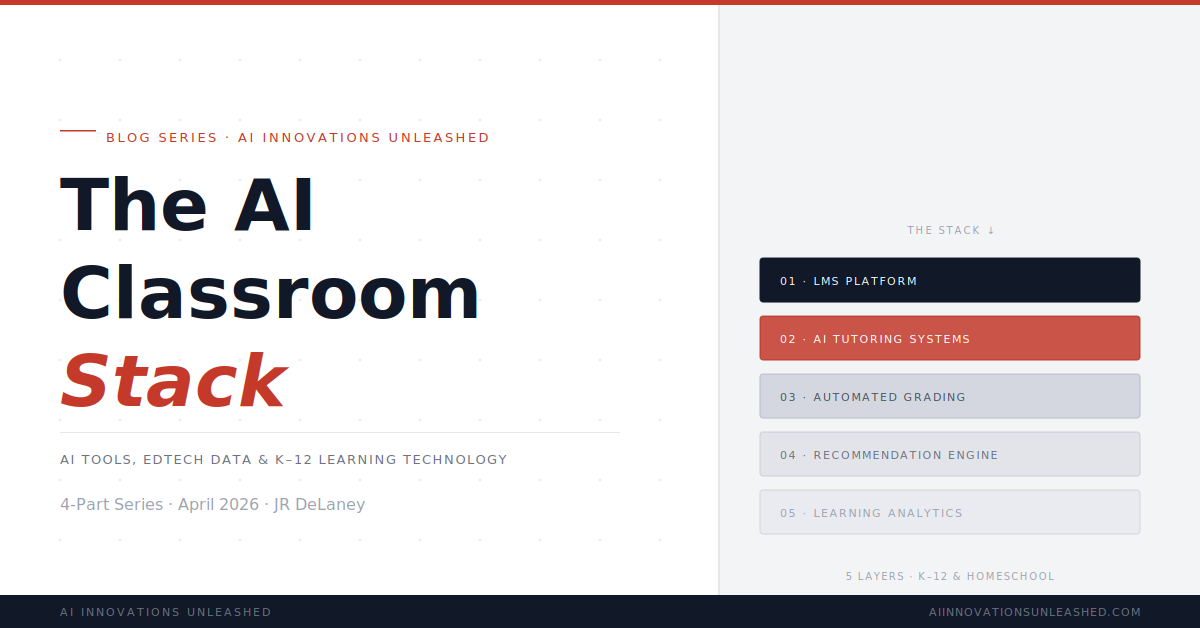
The AI Classroom Stack
A four-part blog series mapping the AI systems already running inside K–12 schools and homeschool programs — what they are, what they’re deciding, who controls the data, and how educators can design something better.
What Is the AI Classroom Stack?
Your school’s learning management system. The AI tutoring platform your district licensed last semester. The automated grading assistant that promises to save teachers hours every week. The analytics dashboard quietly flagging which students need intervention before any teacher has seen a score.
Individually, each of these tools has a brochure, a contract, and a professional development day. Together, they form something no one officially named: the AI classroom stack — an interconnected layer of learning technology that is reshaping K–12 education and homeschool programs from the inside out.
“What happens when the system starts deciding — and no one in the building knows it already has?”
That question drives everything in this series. Not to create alarm. Not to dismiss real gains. But to build the kind of informed fluency that lets educators lead AI adoption rather than inherit it.
The Series: Four Posts, One Complete Picture
What You’ll Walk Away With
Each post is built for educators, administrators, and homeschool parents who don’t have time for theory without application. Every installment ends with something concrete you can use — a framework, a checklist, a set of questions to take into your next vendor meeting or board conversation.

Leave a Reply