


Biometric surveillance systems analyze your face to detect emotions. Discover how this technology works, where it’s deployed, and why experts worry.

“AI Innovations Unleashed: Your Educational Guide to Artificial Intelligence”
Welcome to AI Innovations Unleashed—your trusted educational resource for understanding artificial intelligence and how it can work for you. This podcast and companion blog have been designed to demystify AI technology through clear explanations, practical examples, and expert insights that make complex concepts accessible to everyone—from students and lifelong learners to small business owners and professionals across all industries.
Whether you’re exploring AI fundamentals, looking to understand how AI can benefit your small business, or simply curious about how this technology works in the real world, our mission is to provide you with the knowledge and practical understanding you need to navigate an AI-powered future confidently.
What You’ll Learn:
- AI Fundamentals: Build a solid foundation in machine learning, neural networks, generative AI, and automation through clear, educational content
- Practical Applications: Discover how AI works in real-world settings across healthcare, finance, retail, education, and especially in small businesses and entrepreneurship
- Accessible Implementation: Learn how small businesses and organizations of any size can benefit from AI tools—without requiring massive budgets or technical teams
- Ethical Literacy: Develop critical thinking skills around AI’s societal impact, bias, privacy, and responsible innovation
- Skill Development: Gain actionable knowledge to understand, evaluate, and work alongside AI technologies in your field or business
Educational Approach:
Each episode breaks down AI concepts into digestible lessons, featuring educators, researchers, small business owners, and practitioners who explain not just what AI can do, but how and why it works. We prioritize clarity over hype, education over promotion, and understanding over buzzwords. You’ll hear actual stories from small businesses using AI for customer service, content creation, operations, and more—proving that AI isn’t just for tech giants.
Join Our Learning Community:
Whether you’re taking your first steps into AI, running a small business, or deepening your existing knowledge, AI Innovations Unleashed provides the educational content you need to:
- Understand AI terminology and concepts with confidence
- Identify practical AI tools and applications for your business or industry
- Make informed decisions about implementing AI solutions
- Think critically about AI’s role in society and your work
- Continue learning as AI technology evolves
Subscribe to the podcast and start your AI education journey today—whether you’re learning for personal growth or looking to bring AI into your small business. 🎙️📚
This version maintains the educational focus while emphasizing that AI is accessible and valuable for small businesses and professionals across various industries, not just large corporations or tech companies.
Interact with us NOW! Send a text and state your mind.
In the final episode of our December series ”AI & The Future of Identity,” Dr. JR and AI expert persona Dr. Samantha Chen explore the cutting edge of human-AI integration: neural interfaces and brain-computer technology.
What We Cover:
From ancient dreams of human enhancement to 2024's breakthrough Neuralink human trials, we trace the evolution of brain-computer interfaces (BCIs) and examine what happens when technology becomes literally part of our minds.
Key Topics: • Real-world neural implant applications: Neuralink and Synchron's 2024 human trials • How brain-computer interfaces actually work (explained for non-technical listeners) • The spectrum from medical treatment to cognitive enhancement • Identity philosophy: the Ship of Theseus meets neurotechnology • Privacy concerns: when your thoughts become hackable data • The Neurorights Initiative and Chile's constitutional protections for mental privacy • Economic inequality and the potential ”cognitive divide” • Medical benefits: from paralysis treatment to epilepsy management • The experience of neural integration and cortical remapping
Expert Perspectives: Featuring insights from Satya Nadella (Microsoft CEO) on AI augmentation and Dr. Rafael Yuste (Columbia University) on establishing neurorights frameworks.
Coming in January 2026: ”The Simulation of Intimacy” – exploring AI companions, emotional algorithms, and our ancient hunger for connection.
Subscribe for weekly explorations of AI's impact on humanity, identity, and the future we're building together.
SOURCES AND REFERENCES (APA)
- Musk, E. (2023). Interview on AI symbiosis and Neuralink's long-term vision. The Joe Rogan Experience.
- Nadella, S. (2023). The future of AI and human potential. Microsoft CEO Summit Interview.
- Reardon, S. (2024, January 30). Neuralink implants brain chip in first human patient. Nature. https://www.nature.com/articles/d41586-024-00194-7
- Synchron. (2024, July). Synchron announces brain implant patients control Amazon Alexa with thoughts [Press release]. https://synchron.com/press
- Yuste, R., Genser, J., & Herrmann, S. (2021). It's time for neuro-rights. Nature, 599, 217-219. https://doi.org/10.1038/s41586-021-04112-y
- Yuste, R., et al. (2023). Brain-to-brain communication via neural interfaces. Nature Neuroscience, 26, 382-390.
News Sources:
- Neuralink second patient announcement (September 2024)
- Chile constitutional amendment on neurorights (2021)
- NeuroPace FDA approval and clinical outcomes
- Current research on visual and auditory cortex stimulation
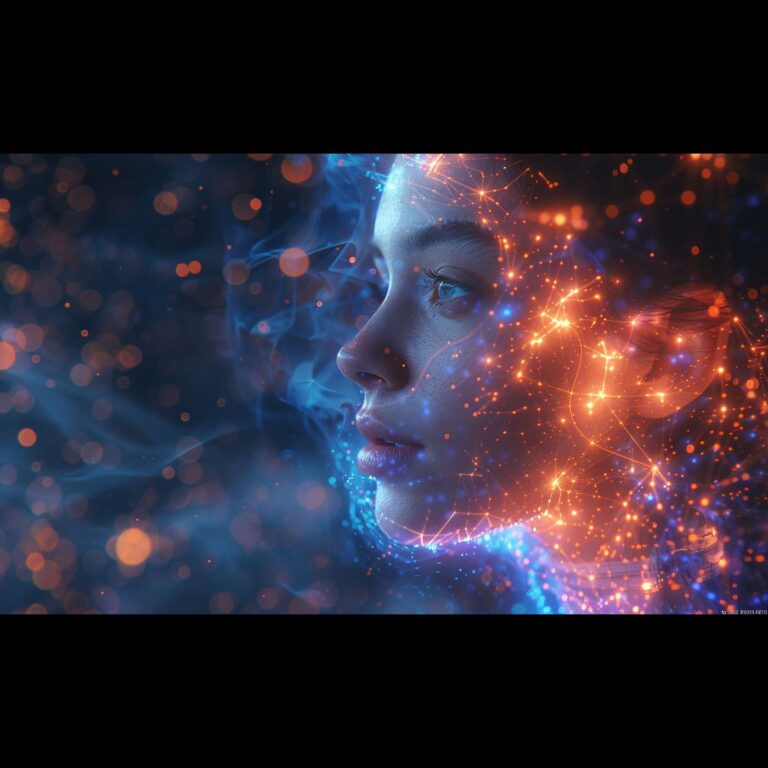
AI systems are reading your face right now—in stores, schools, workplaces, and airports. But can they really detect your emotions? And should they?
Episode 2 of our AI & The Future of Identity series explores emotion recognition AI and biometric surveillance. We examine how these systems work, where they’re deployed, and why experts are sounding alarms about accuracy, bias, and privacy.
WHAT WE COVER:
• How emotion recognition AI analyzes facial expressions, vocal tone, and body language to predict emotional states
• Why the science is controversial—research shows emotional expressions aren’t universal across cultures
• Real-world applications: Walmart checkout cameras, Amazon warehouse monitoring, HireVue job interviews, online exam proctoring
• Discrimination risks for neurodivergent individuals, different cultures, and marginalized communities
• Workplace surveillance and the erosion of employee privacy
• Law enforcement use and the dangers of automated guilt detection
• Beneficial applications in mental health screening and accessibility technology
• Current regulations: EU AI Act, US city bans, and the gaps that remain
• What you can do to protect your emotional data and demand transparency
FEATURED INSIGHTS FROM: • Satya Nadella (Microsoft CEO) on responsible AI development • Meredith Whittaker (Signal President) on algorithmic bias • Shoshana Zuboff (Harvard Business School) on surveillance capitalism • Dr. Lisa Feldman Barrett’s groundbreaking emotion research
NEXT EPISODE: Culture vs. Code – How AI threatens and preserves cultural identity
Subscribe now!
#AIInnovationsUnleashed #EmotionAI #BiometricSurveillance #AIPrivacy #TechEthics
REFERENCES
- Barrett, L. F., Adolphs, R., Marsella, S., Martinez, A. M., & Pollak, S. D. (2019). Emotional expressions reconsidered: Challenges to inferring emotion from human facial movements. Psychological Science in the Public Interest, 20(1), 1-68. https://doi.org/10.1177/1529100619832930
- Feldman, S. (2023, June 15). The emotion detection and recognition market is booming. MIT Technology Review. https://www.technologyreview.com
- Harwell, D. (2021, November 6). Managers turn to surveillance software to keep tabs on remote workers. The Washington Post. https://www.washingtonpost.com
- Jack, R. E., Garrod, O. G., Yu, H., Caldara, R., & Schyns, P. G. (2012). Facial expressions of emotion are not culturally universal. Proceedings of the National Academy of Sciences, 109(19), 7241-7244. https://doi.org/10.1073/pnas.1200155109
- MarketsandMarkets. (2023). Emotion detection and recognition market – Global forecast to 2028. MarketsandMarkets Research Private Ltd.
- Nadella, S. (2023, May 25). The age of AI demands responsible innovation [Interview]. Financial Times. https://www.ft.com
- Seppälä, A., Blazevic, K., & McDonald, S. (2023). AI-powered mental health assessment using multimodal behavioral cues. JAMA Psychiatry, 80(4), 392-401. https://doi.org/10.1001/jamapsychiatry.2023.0012
- Zuboff, S. (2019). The age of surveillance capitalism: The fight for a human future at the new frontier of power. PublicAffairs.

Leave a Reply