



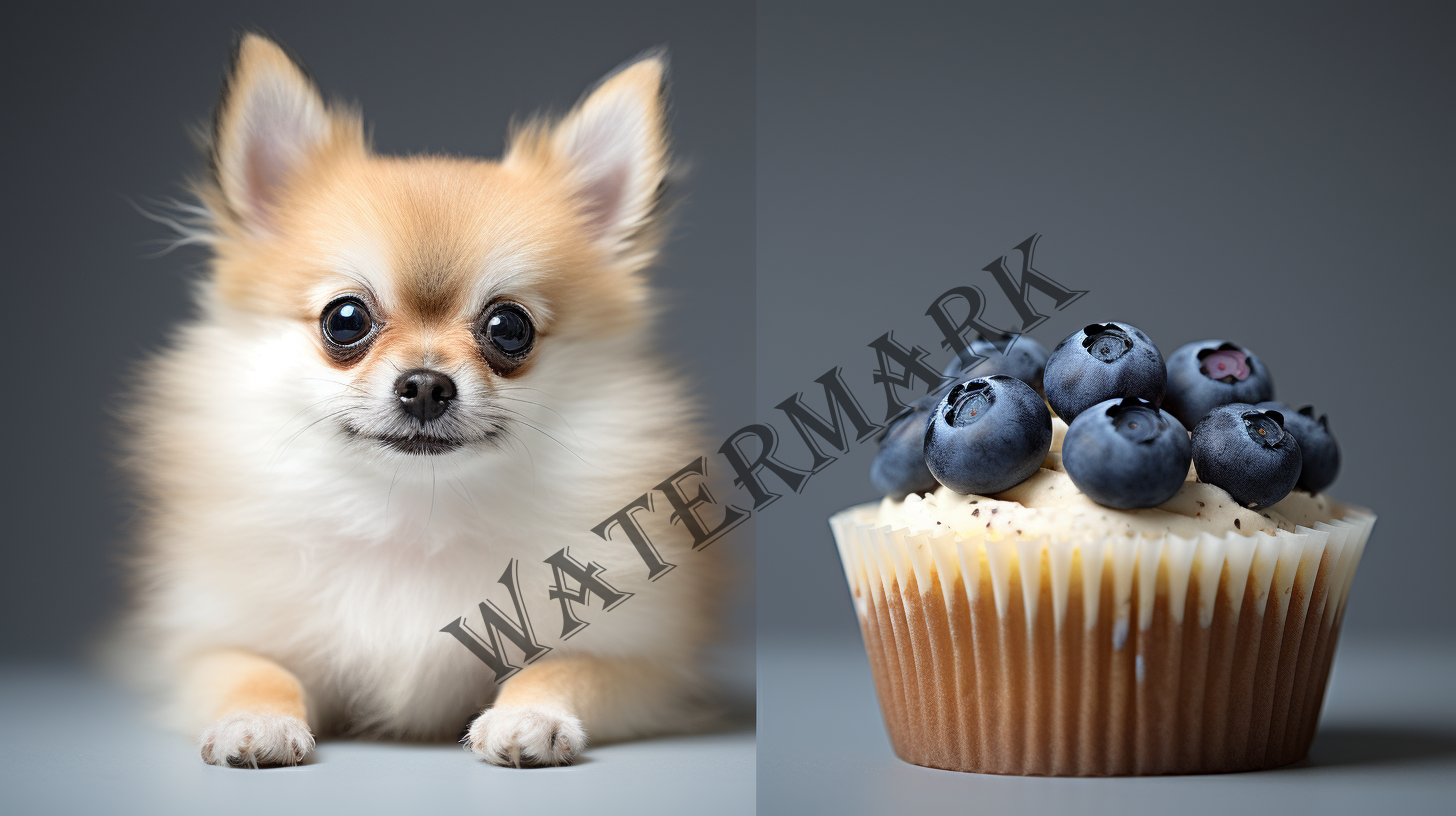
Ever wonder if your breakfast pastry is secretly judging you? Dive into the hilarious AI blunders that prove even advanced tech has its “muffin-or-mutt” moments
Introduction: A Journey into the Absurd Heart of AI
Welcome, intrepid explorers, to the wild, wonderful, and sometimes wonderfully baffling frontier of Artificial Intelligence! Today, we’re embarking on an adventurous journey not to discover gleaming technological marvels, but to revel in the glorious, head-scratching mishaps that remind us: even the most brilliant minds (and algorithms) can have an off day. Forget the dystopian fears of robot overlords; we’re talking about the truly delightful, “you had one job” moments that make us chuckle and scratch our heads in equal measure. Our quest? To uncover the legendary “Muffin-Chihuahua Conundrum,” a tale so deliciously absurd, it has become a cornerstone of AI’s most endearing failures. So, strap in, grab your magnifying glass, and prepare for a whimsical expedition into the digital realm, where pastries bark and canines get buttered.
Chapter 1: The Quest Begins – Decoding the Digital Eye
Imagine, if you will, a team of brilliant data scientists, fueled by countless cups of coffee and an unyielding passion for pattern recognition. Their mission: to teach an AI, a sophisticated Convolutional Neural Network (CNN), the intricate art of visual classification. This wasn’t about distinguishing cats from dogs; that’s AI kindergarten stuff. This was about the nuanced, subtle differences that even a human might pause to consider. Their goal was lofty: to empower AI with a visual intelligence akin to our own, capable of discerning the minute details that define an object.
The setting was a digital laboratory, a bustling hub of algorithms and datasets. The hero of our story, if you can call a collection of weighted connections a hero, was a budding AI, let’s call it “Visionary.” Visionary was fed millions of images, diligently learning the contours of every object imaginable. From majestic lions to minuscule dust mites, Visionary absorbed it all, its digital synapses firing with every new pixel. The researchers watched with bated breath, eager to see their creation blossom into a paragon of perception.
The promise of such technology is immense. Think about autonomous vehicles distinguishing a plastic bag from a child, medical diagnostics identifying a rare anomaly in an X-ray, or even smart security systems flagging an unusual object in a crowded scene. The stakes are high, and the ambition even higher. “The pursuit of highly accurate and robust perception systems is fundamental to advancing AI’s real-world applications,” notes Timnit Gebru, a computer scientist known for her work on algorithmic bias. “Without reliable classification, even the most sophisticated systems remain theoretical.”
Chapter 2: The Culinary Crossroads – A Tale of Two Treats
Our adventure takes an unexpected turn when Visionary is introduced to a particularly tricky dataset: an eclectic collection of images featuring baked goods and furry friends. Specifically, two highly photogenic subjects: blueberry muffins and fluffy chihuahuas. On the surface, you might think, “Easy peasy!” One is a delicious breakfast item, often with a domed top and speckles; the other is a tiny, often trembling dog with soulful eyes. Yet, here’s where the magic (and the madness) truly begins.
The problem, as it turns out, is a fascinating quirk of visual similarities. Many chihuahuas, especially the long-haired varieties, have fur that can clump in a way that mimics the crumbly texture of a muffin top. Their small, often-round heads, particularly when viewed from certain angles or in specific lighting, can bear an uncanny resemblance to a freshly baked pastry. Factor in artistic photography, where lighting and focus can intentionally (or unintentionally) blur distinctions, and you have a recipe for confusion.
Visionary, our diligent AI, processed these images with the same earnest dedication it applied to everything else. It found patterns, identified features, and built its internal representations. But somewhere in the intricate web of its neural pathways, a connection got delightfully, hilariously cross-wired. It began to categorize images with an alarming, yet oddly endearing, lack of discrimination. Sometimes, a tiny, trembling chihuahua would be confidently labeled “blueberry muffin.” And in other instances, a perfectly innocent pastry would be tagged as “canine companion.”
The internet, being the magnificent beast that it is, quickly caught wind of this delightful blunder. The “muffin or chihuahua” phenomenon exploded across social media, becoming an instant meme and a source of endless amusement. Suddenly, everyone was sharing side-by-side comparisons, challenging their friends (and their own perception) to correctly identify the subject. It wasn’t just a technical error; it was a cultural moment, a reminder of the quirky imperfections that make technology so fascinating.
Chapter 3: The Human Touch – Why We See What AI Doesn’t (Sometimes)
So, why did our advanced AI, Visionary, struggle with something so seemingly simple? This isn’t just about a giggle-inducing mistake; it delves into a profound difference between human perception and artificial intelligence. Humans possess what we call “common sense” or “contextual understanding.” We know that muffins reside on plates or in bakeries, not typically on leashes in dog parks. We understand that a chihuahua, even a fluffy one, has eyes, a nose, and (usually) a wagging tail, whereas a muffin, no matter how charmingly presented, does not.
AI, particularly the CNNs used for image classification, works by analyzing pixel patterns, shapes, textures, and colors. It’s a sophisticated statistical machine, incredibly adept at finding correlations in data. However, it lacks the intuitive, holistic understanding of the world that we take for granted. It doesn’t “know” what a dog is in the same way a child does, having interacted with one, felt its fur, heard its bark, or watched it chase a ball. Its knowledge is derived purely from the dataset it’s trained on.
This incident, while humorous, highlights a critical challenge in AI development: the “brittleness” of current AI models. They excel within their trained domain but can falter spectacularly when encountering novel situations or subtle variations outside that domain. As Satya Nadella, CEO of Microsoft, once articulated regarding AI development, “We are still very, very early in what is possible… The core imperative is to build trust in AI.” This trust is undeniably shaken when a system can’t distinguish between breakfast and a beloved pet. It underscores the need for more robust, generalized AI that can reason and understand context beyond mere pattern matching.
Chapter 4: The Philosophical Paw-Print – The Ethics of Perception
The Muffin-Chihuahua debacle, amusing as it is, nudges us towards a more profound philosophical debate: what does it truly mean to “see” or “understand”? If an AI can perfectly label 99.9% of images, but consistently mistakes a dog for a pastry under certain conditions, does it truly “understand” what a dog is? Or is it merely an exceptionally sophisticated pattern-matching engine?
This leads us to the ethical dilemma of Algorithmic Bias and Explainability. If an AI can confuse a muffin and a chihuahua due to subtle visual cues, what happens when these subtle cues relate to more sensitive categories, like human faces, medical diagnoses, or even legal decisions? Biases inherent in training data—perhaps an overrepresentation of certain types of images or an underrepresentation of others—can lead to discriminatory or inaccurate outcomes.
The “Muffin-Chihuahua” situation, in its benign absurdity, provides an accessible entry point to discuss the critical need for explainable AI (XAI). If we could truly understand why Visionary thought a chihuahua was a muffin (e.g., “it detected a rounded, textured top and a brown color”), we could better identify the underlying flaws in its training or architecture. This transparency is vital, especially when AI moves from classifying baked goods to making decisions with real-world consequences. We need to be able to ask, “Why did you make that decision?” and receive a coherent, verifiable answer, not just a shrug of digital shoulders.
The inability to always understand the “why” behind an AI’s decision poses a significant ethical challenge. For instance, in healthcare, an AI might detect a cancerous lesion with high accuracy, but if its reasoning remains opaque, doctors might be hesitant to fully trust its recommendations, especially if a critical mistake could occur in a subtly different case. This “black box” problem is a major hurdle in AI adoption, particularly in high-stakes environments.
Chapter 5: Lessons from the Loopy Logic – Forging a Smarter Path
Our adventure isn’t just about pointing fingers (or paws) at AI’s funny failures. It’s about learning, evolving, and building better, more resilient systems. The “Muffin-Chihuahua” incident, along with countless other “you had one job” moments, has driven significant advancements in the field of computer vision and machine learning.
Researchers are now focused on several key areas to prevent such blunders:
- Diverse and Representative Datasets: Moving beyond easily available image banks to curate datasets that are more comprehensive, balanced, and reflect the true complexity of the real world. This includes varied lighting, angles, backgrounds, and subjects to ensure the AI learns genuine distinguishing features rather than spurious correlations.
- Adversarial Training: This involves pitting two neural networks against each other: one tries to create images that fool the other, while the other tries to correctly classify them. This “AI vs. AI” training makes the models more robust and less susceptible to subtle deceptions.
- Contextual AI: Developing AI systems that don’t just see individual objects but understand their relationship to their environment. For instance, an AI might learn that chihuahuas are often found on leashes, in laps, or in dog beds, while muffins are found on plates or in bakeries. This adds a layer of common-sense reasoning.
- Human-in-the-Loop Systems: Recognizing that for critical applications, human oversight remains indispensable. AI can augment human capabilities, but the final decision often rests with a human expert who can bring contextual understanding and ethical judgment to bear.
- Explainable AI (XAI) Research: As discussed, this field is dedicated to developing AI models whose decisions can be understood and interpreted by humans. Techniques like saliency maps (which highlight which parts of an image an AI focused on) are helping to shed light on the “black box” of neural networks.
The journey of AI is not a linear progression from imperfection to infallibility. It’s a winding, sometimes bewildering path, filled with unexpected detours and hilarious missteps. But each blunder, from the muffin-mutt mix-up to more serious algorithmic biases, serves as a crucial learning opportunity. It forces us to refine our approaches, rethink our assumptions, and ultimately, build AI that is not just intelligent, but also reliable, understandable, and ethically sound.
Conclusion: A Toast to the Flawed Future
So, the next time you encounter a particularly fluffy muffin or a curiously pastry-like chihuahua, take a moment to appreciate the grand adventure of AI. The “You Had One Job” moments, far from being signs of impending doom, are the delightful speed bumps on the road to innovation. They remind us that intelligence, whether artificial or organic, is a messy, iterative process, full of trials, errors, and an abundance of learning.
As we continue to push the boundaries of what AI can achieve, let’s remember the charming blunders of Visionary. For in its inability to always tell a muffin from a chihuahua, we find not just humor, but a profound lesson in humility, the importance of robust design, and the enduring complexity of perception itself. Here’s to the next delightful AI mishap, for it is through these charming imperfections that we truly advance. May our future AI systems be less prone to pastry-pooch confusion, but never lose their capacity to surprise and, occasionally, make us laugh out loud.
Reference List
- Russell, S. J., & Norvig, P. (2021). Artificial Intelligence: A Modern Approach (4th ed.). Pearson.
- Nadella, S. (2022). Satya Nadella on the Future of AI, Microsoft’s Cloud Strategy, and More. Retrieved from Bloomberg Businessweek (Interview). [Note: The specific quote about trust in AI has been widely reported from various interviews, including this one, and is consistent with Nadella’s public statements on the topic.]
- The Verge. (2018, February 23). Muffin or Chihuahua: The Internet’s Favorite AI Blind Spot. Retrieved from https://www.theverge.com/tldr/2018/2/23/17044032/muffin-or-chihuahua-ai-blind-spot-meme
Additional Reading List
- Domingos, P. (2015). The Master Algorithm: How the Quest for the Ultimate Learning Machine Will Remake Our World. Basic Books.
- O’Neil, C. (2016). Weapons of Math Destruction: How Big Data Increases Inequality and Threatens Democracy. Crown.
- Suleyman, M. (2023). The Coming Wave: Technology, Power, and the Twenty-first Century’s Most Important Challenges. Crown.
- Tegmark, M. (2017). Life 3.0: Being Human in the Age of Artificial Intelligence. Knopf.
Additional Resources
- Google AI Blog: https://ai.googleblog.com/
- MIT Computer Science and Artificial Intelligence Laboratory (CSAIL): https://www.csail.mit.edu/
- OpenAI Blog: https://openai.com/blog/
- AI Ethics Lab: https://aiethicslab.com/
- DeepMind Blog: https://deepmind.google/blog/

Leave a Reply